Pest Control Service Baltimore rowhome owners keep on speed dial starts with a diagnosis — the species, the food source, and the hole — not with a canister of spray and a door hanger. We work attached rowhomes, alley-facing basements and converted multi-units from Canton and Fells Point to Bolton Hill and Roland Park, and we put the scope, the products and the re-entry time in writing before anyone opens a bottle.

A pest control service in Baltimore is a company that inspects a home or building, identifies the pest species, treats the active infestation, and seals the gaps, pipe chases and party-wall openings the pests are using to get back in.
Every service reflects the same meticulous attention to detail — whether it's a single job or a larger pest control service project across Baltimore.

House mice get into Baltimore rowhomes through gaps you can cover with a dime — the pipe chase under the kitchen sink, the gap where the basement joists meet the shared party wall, the worn threshold on an alley-facing door. Our mouse work is a two-part job: trapping and monitoring inside to clear the active population, then sealing with steel wool, copper mesh, sheet metal and mortar-grade filler where mice can chew back through. We map droppings and rub marks first so the sealing goes where the traffic actually is, not everywhere at once. Sealing matters most when you share a wall, because a neighbor's untreated kitchen keeps sending mice your way. Expect the sealing list in writing — every opening we close is named by location so you can see what you paid for.
View details →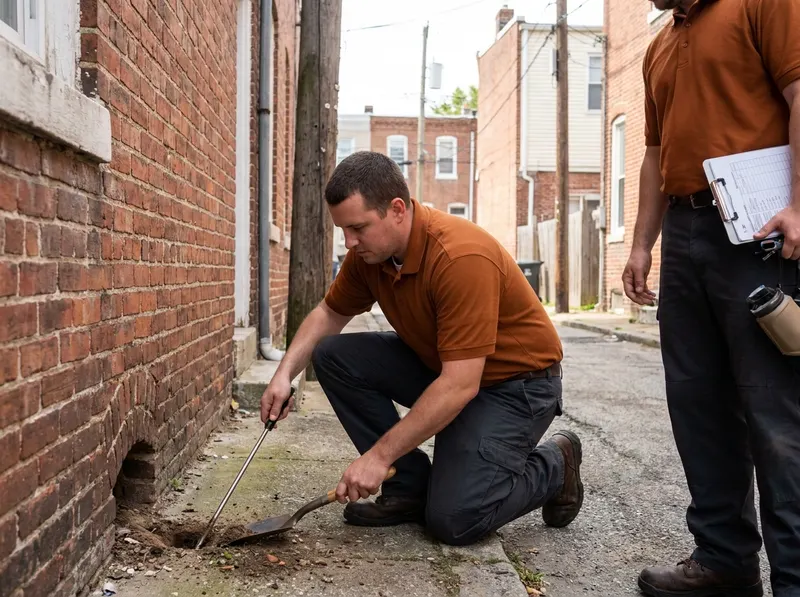
Norway rats in Baltimore live on the alley grid — trash cans, mixed-use dumpsters, soft soil under back fences and porch slabs — and they travel the same runs every night. We inspect the yard and alley side for burrow openings, grease trails and gnaw damage, treat and collapse active burrows, place tamper-resistant exterior housings where children and pets cannot reach them, and seal the foundation, crawl gap and cellar door where rats are getting under the structure. Interior activity is handled with trapping rather than bait so nothing dies in a wall. Rats chew through soft mortar joints and old formstone patches, so repairs use metal or cementitious material rather than foam. Rat pressure in a rowhome block is a shared problem — sealing your building is what keeps your side clear when the alley stays busy.
View details →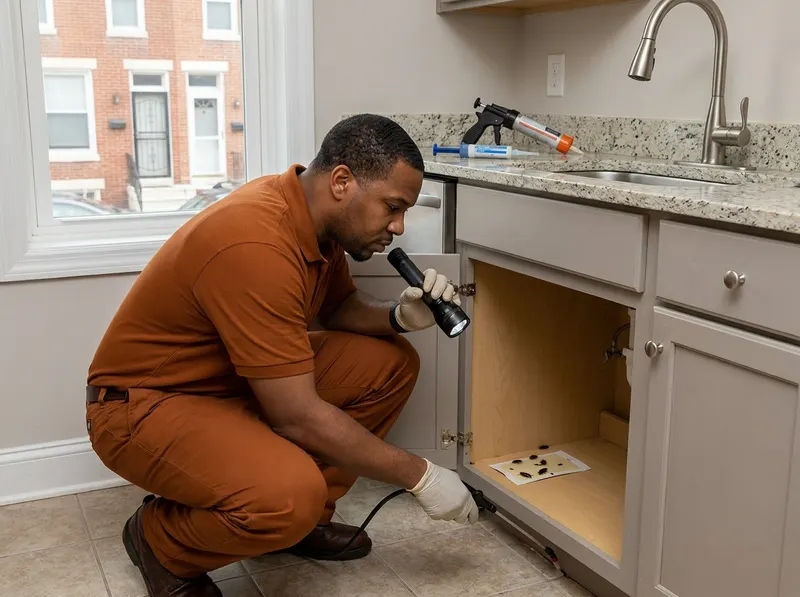
German cockroaches are the kitchen and bathroom species behind most Baltimore roach calls, and they move between attached units through plumbing walls and shared cabinet runs. We treat with gel bait and targeted crack-and-crevice application in hinge voids, under sink cabinets, behind the refrigerator motor housing and along dishwasher lines — not broadcast spraying over surfaces where food is prepped. Because eggs are shielded inside the capsule, the program runs two to three visits spaced 10 to 14 days apart, with monitors placed so you can see the count drop. You get a prep sheet in plain language and the re-entry time before we start. In a converted multi-unit, we will tell you honestly if the source looks like the neighboring kitchen or a shared trash room, because that changes what one unit's treatment can accomplish.
View details →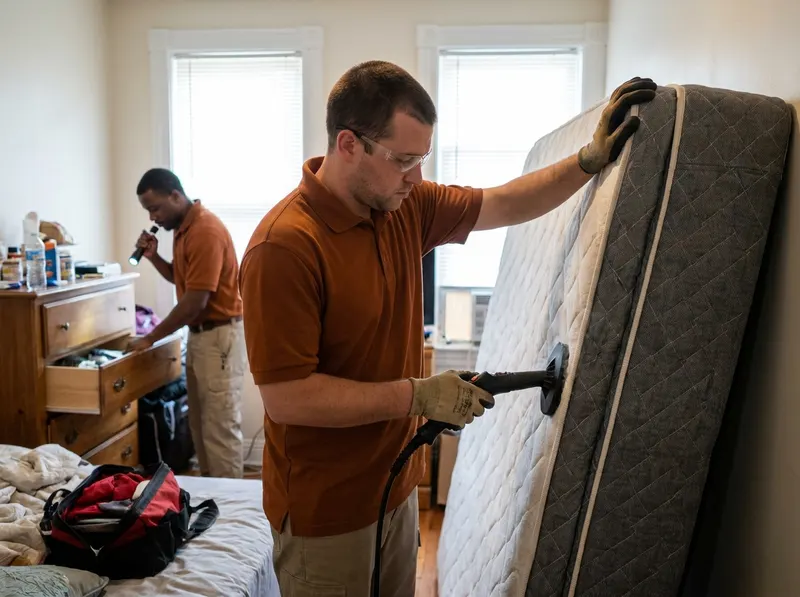
Bed bug work in Baltimore runs year-round in apartments, converted rowhomes and student housing near the Charles Village and Johns Hopkins Hospital corridors, and turnover clusters hard around late-summer lease dates. We inspect seams, bed frames, headboard mounts, baseboard gaps and upholstered furniture, confirm the ID before treating, and then run either a multi-visit chemical program or a heat treatment depending on your timeline and how much clutter can be processed. Encasements and interceptors go in so you can verify the result instead of guessing. Prep instructions are written out room by room, including what to bag, what to launder and what to leave in place. Follow-up inspection is part of the job — a bed bug job is not finished until a follow-up check finds nothing.
View details →
Eastern subterranean termites are the species that matters in Baltimore, and they reach a rowhome through soil contact at the foundation, the basement slab edge, and any wood in contact with damp masonry. Treatment options are a liquid soil barrier applied by trenching and, where a sidewalk or basement slab is in the way, drilling and injecting through it — or an in-ground bait and monitoring system installed around the perimeter and serviced on a schedule. We show you the mud tubes, the damaged wood, or the discarded wings before recommending either. Swarm season is roughly late March through May on warm, damp days, and April inspection slots book first, so a March call gets you the earlier appointment. Written scope names the product, the perimeter footage and what is and is not covered.
View details →
A termite inspection for a Baltimore home sale is a visual inspection of accessible areas — basement sills, joists, the foundation perimeter, crawl spaces, porch framing — with written findings for your lender, title company or buyer. Real-estate letters ride the spring and summer closing season, so allow about a week of lead time from May through August and tell us the settlement date when you book. If the inspection finds active termites, you get the treatment scope and range in the same visit rather than a second appointment. Ask when you schedule if your lender requires a specific wood-destroying insect report form and we will confirm what we can provide before you commit.
View details →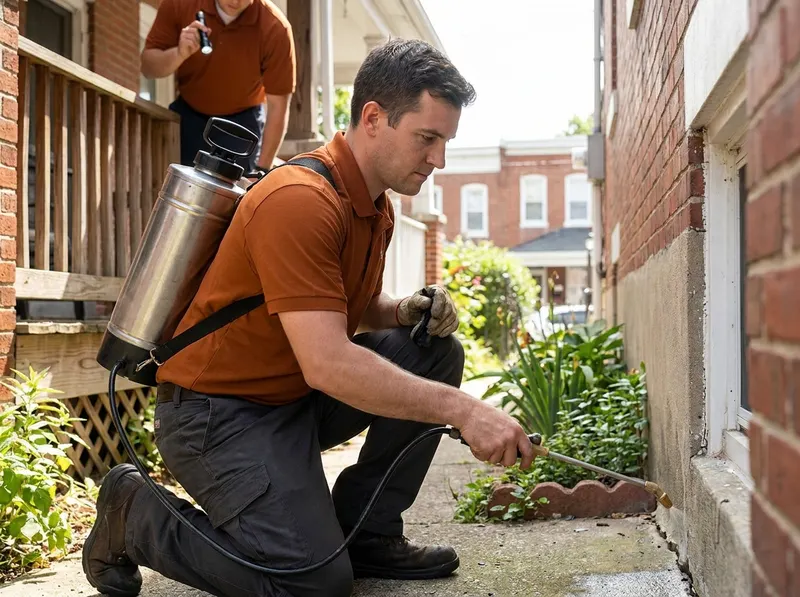
Ant calls in Baltimore climb from April into June as basements warm up, and the two species behind most of them behave differently. Odorous house ants trail along kitchen counters, dishwasher lines and baseboard gaps and are solved with non-repellent bait that the workers carry back to the colony — surface sprays scatter the trail and split the colony into more trails. Carpenter ants mean moisture: a leaking downspout, a rotted porch column, a window sill weathered under old paint, or damp joists near a party-wall chimney chase. We find the moisture source and tell you what needs a carpenter's attention, then treat the galleries and the exterior entry points. Naming the ant species is the whole job — the wrong bait feeds the problem instead of ending it.
View details →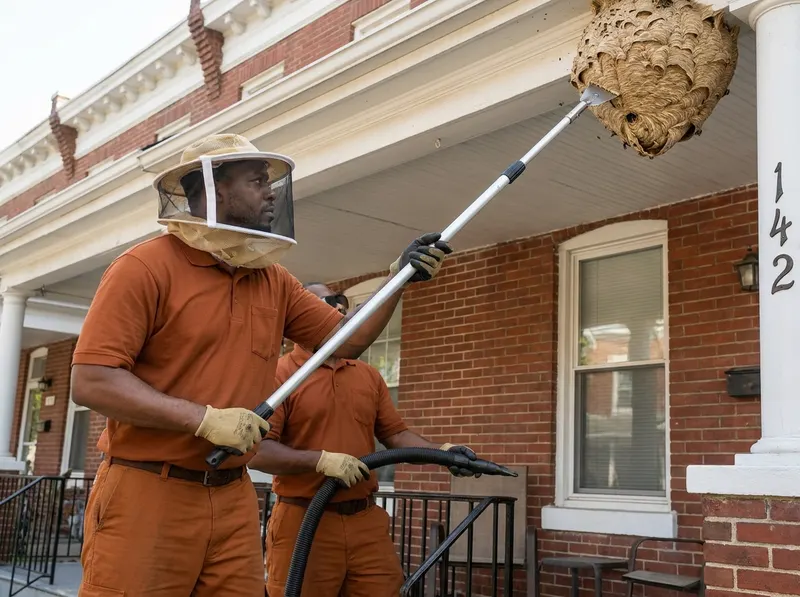
Yellowjacket and hornet calls in Baltimore spike in late August and September, when colonies are at their largest and most defensive, and the nests turn up in the same places every year: rowhouse cornices, soffit returns, porch roof voids, the gap behind a fascia board, and ground burrows along a fence line or retaining wall. We locate the actual entrance, treat the void directly, and where the nest is accessible we remove the comb so the site is less attractive next season. Bald-faced hornet aerials in a street tree or rear yard are handled from the ground where we can do it safely. Re-entry timing and a clear stay-away radius are given before we start, which matters when you have kids, a dog, or a tenant using the back steps.
View details →A pest control service in Baltimore is a company that inspects a home or building, identifies the pest species, treats the active infestation, and seals the gaps, pipe chases and party-wall openings the pests are using to get back in.
You get a firm, itemized quote for your pest control service before any work begins — no surprises, no pressure.
Careful prep, tidy work, and a full cleanup when we are done. We treat your home and belongings like our own.
The same trusted, background-checked team from the first call to the final check.
The right plan depends on the pest, the building type and whether you share a wall — so here is the honest mapping. If you have a one-off problem in a detached house with a dry basement — a wasp nest under a Roland Park porch roof, ants along a kitchen baseboard in late April, a single mouse after a warm October night — a one-time treatment with targeted sealing is the correct buy, usually one visit plus a check-in. If you own or rent an attached rowhome in Canton, Highlandtown or Federal Hill and the pests keep coming back after each spray, choose treatment plus exclusion: sealing the joist pockets, the party-wall gaps behind cabinets, the water-line and gas-line penetrations, and the alley-side basement door sweep. The trade-off is real — exclusion costs more up front and takes longer on site because it is carpentry as much as pest work, but it is the only part of the job that stops re-entry from the unit next door. For German cockroaches, if the kitchen has active adults during the day, choose the multi-visit knockdown series rather than a single spray. Roach eggs are protected inside the capsule, so a one-visit job leaves a hatch behind; two or three visits spaced 10 to 14 days apart catch the hatch cycle. The trade-off is scheduling — you will need to be reachable for follow-ups and keep bait stations undisturbed. For bed bugs, if you have one or two rooms and can prep thoroughly, a multi-visit chemical program is the lower-cost path; if you have a tenant turnover deadline, an infant, or clutter you cannot process in time, heat treatment finishes faster in a single day. The trade-off is cost against calendar: chemical programs are cheaper per room but run two to four weeks, heat is a same-day resolution at a higher price. For rats, if the activity is in the alley, the yard or a burrow along a fence line, exterior burrow treatment and secured bait housings do the work. If you are hearing them inside walls or under a kitchen floor, trapping plus sealing is the correct call — we do not bait rodents inside living space where a carcass can die in a wall cavity. For termites, a liquid soil barrier around the foundation is the standard for an attached rowhome perimeter and protects the whole footprint; a bait-and-monitor system fits owners who want ongoing monitoring instead of trenching. The trade-off is disruption versus patience: the barrier means digging and drilling along the perimeter and works immediately, monitoring is far less invasive but takes months to knock a colony down. For yard pests, the choice is between a single knockdown before an event and a seasonal program. If you have a graduation party in Patterson Park's surrounding blocks or a backyard cookout next weekend, one mosquito and tick treatment applied to shaded harborage — ivy beds, fence lines, under decks — is enough. If you use the yard every evening from June through August, the recurring program is the better buy because mosquitoes re-enter from neighboring lots within roughly two to three weeks. The trade-off is per-visit cost versus continuous coverage. On contracts: if the pest is solved, a quarterly plan is optional, not mandatory. If you own a rental, a converted three-unit near Charles Village, or a house that backs onto an active alley, recurring visits are genuinely worth it because reinfestation pressure never stops. If you live in a detached house away from the alley grid, a one-time job and a good door sweep may hold for years. Ask for month-to-month terms and cancel when the problem is closed — that is a fair question and you should get a straight answer.
Every project gets a firm, written price after a free on-site visit. Ranges below for orientation.
Tell us about your pest control service job and we'll send a clear, written quote — usually the same day. Or just call and talk to a real Baltimore pro.
(667) 309-5283
Baltimore City is an independent city that is not part of any county — it borders Baltimone County on three sides and Anne Arundel County to the south — and its housing stock is what makes pest work here different from a suburban route. Most rowhome blocks in Canton, Highlandtown, Federal Hill and Hampden share a service alley where cans sit out overnight, and they share party walls, chimney chases and joist pockets with the units on either side, so rats, mice and German cockroaches are block-level problems rather than single-address problems. Basements sit low and damp against brick foundations near Locust Point and the Inner Harbor waterfront, which is exactly the soil-contact condition Eastern subterranean termites use, while yards backing onto the tree canopy at Druid Hill Park, Patterson Park, Cylburn Arboretum and Gwynns Falls Leakin Park take the heaviest tick and mosquito pressure at the edge where mowed lawn meets brush. Older formstone and repointed brick facades in Bolton Hill and Mount Vernon leave soft mortar joints and window-weight pockets that mice and overwintering stink bugs use as doorways, which is why our repairs use metal, mesh and cementitious filler instead of expanding foam. Rental density around Charles Village and the Johns Hopkins Hospital corridor in East Baltimore also means bed bug and roach work clusters around lease-turnover dates in late summer, and a landlord who seals now avoids paying for the same unit twice.
Free estimates for Baltimore & the surrounding area.
 Elvanta Pest Control Service