Bed bugs move with people and furniture, which is why the pattern in Baltimore looks different than it does in a detached subdivision house. In Charles Village and Mount Vernon, the calls come from big old rowhomes…
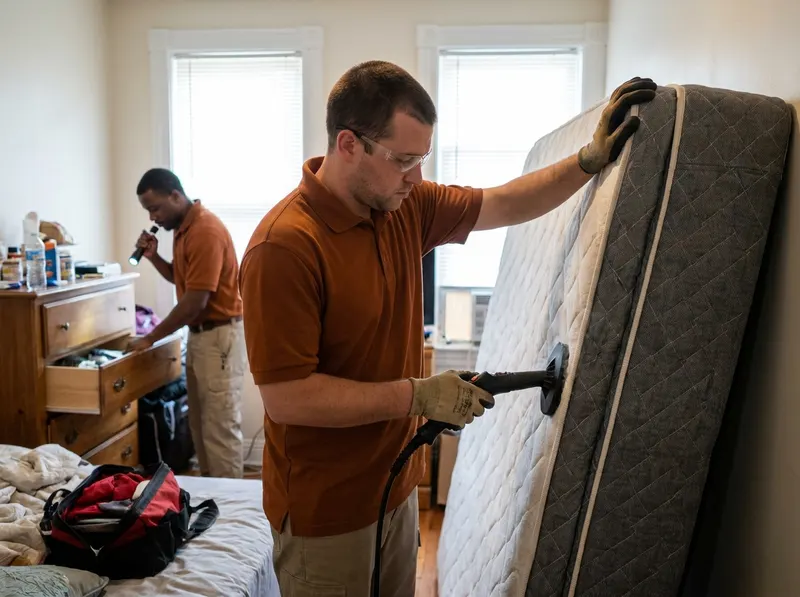
Bed bugs move with people and furniture, which is why the pattern in Baltimore looks different than it does in a detached subdivision house. In Charles Village and Mount Vernon, the calls come from big old rowhomes carved into three or four rental units with a shared front stair — one tenant turns over, a used couch or a mattress comes up that stair, and the unit above starts finding bites six weeks later. In Canton, Fells Point and Locust Point, it is furnished rentals and short-stay units where luggage is the vector. In Highlandtown and Bolton Hill, the subdivided townhouses put beds against a plaster party wall with cast-iron radiator penetrations and half-inch gaps at the base shoe — exactly the seams a treatment has to reach. Curbside mattresses in the back alleys around Patterson Park are a symptom, not a solution; hauling the bed out usually just pushes bugs into the closet and the sofa and costs you a mattress.
The first decision is how wide to treat. A contained single-bedroom scope fits when the inspection finds live bugs, cast skins and interceptor hits only in one sleeping room, no bites reported elsewhere, and no upholstered furniture in the living room that anyone sleeps on. That is the cheaper, faster path. Whole-unit treatment is the honest call when someone has been sleeping on the couch to escape bites, when a second bedroom shows staining along the mattress piping, or when the unit is a converted rowhome and an adjoining apartment reports bites in the same month. The trade-off is real money: treating one room in Hampden might land near the minimum, while a three-bedroom Federal Hill rowhome with living room seating sits at the top of the range. Under-scoping is the more expensive mistake, because a missed room reseeds the treated one and you pay for the whole cycle twice.
What holds results in an attached house is the part most companies skip. Encasements lock in anything left in a mattress or box spring and turn the bed into a surface you can inspect in ten seconds. Sealing baseboard gaps, floor-board seams and the openings where pipes and radiator lines pass through a shared wall removes the harborage bugs retreat into and slows migration from next door. Interceptor monitors under each bed leg give you and us a countable answer at the follow-up — either the cups are empty or they are not. Sealed out, not just sprayed is the whole approach: product does the knockdown, physical work and monitoring keep the second month quiet.
On the two questions people ask before booking: pricing cannot be finalized over the phone because the number depends on bed count, room count and how much upholstered furniture is in play, and any price given sight-unseen is either padded or about to change. And bed bug work here is a defined scope with its own follow-up schedule, not an open-ended monthly plan — the follow-ups are quoted with the job, and when the monitors stay clear and bites stop, the job is finished. Baltimore City rowhome owners, small landlords and tenants preparing for a lease inspection or a sale get the same written scope and the same re-entry timing in writing. Call (667) 309-5283 to schedule the inspection.
Every job gets a firm, written price after a free on-site visit.
Tell us about your bed bug treatment and follow-up job in Baltimore and we'll send a clear, written quote — usually the same day.
 Elvanta Pest Control Service